
Franchise Buyer Persona Profile: The Millennial / Gen Z Digital-Native
This article continues our ongoing series examining the 15 franchise buyer personas that shape today's franchise development landscape. Every persona carries its own financial profile, decision rhythm, and set of expectations, and brands that recognize those differences consistently attract better-fit owners.
In this installment we profile the Millennial / Gen Z Digital-Native. This buyer is younger than most candidates in a franchisor's pipeline, moves faster than nearly every other persona, and evaluates a brand through a lens that older buyers rarely apply. Franchisors who understand that lens gain access to a growing pool of ambitious, technically fluent owners.
The Millennial and Gen Z Digital-Native Franchise Buyer
This persona is defined by a single driving need. They want to build wealth and independence through tech-driven, scalable franchise models that match their values. Each element of that sentence carries weight, and skipping any one of them costs you the candidate.
Two data points separate this buyer from every other persona in the framework. Their estimated net worth of $200,000 to $600,000 is the lowest band in the series, and their decision timeline of two to four months is the fastest. You are working with a buyer who has less capital to deploy and far less patience for a slow process.
That combination changes how franchise development teams need to operate. A candidate who reaches a decision in eight to twelve weeks will not wait five business days for a territory answer. Speed, transparency, and modern systems are not conveniences for this persona. They are qualifying criteria.
What Is the Demographic Profile of the Millennial / Gen Z Digital-Native?
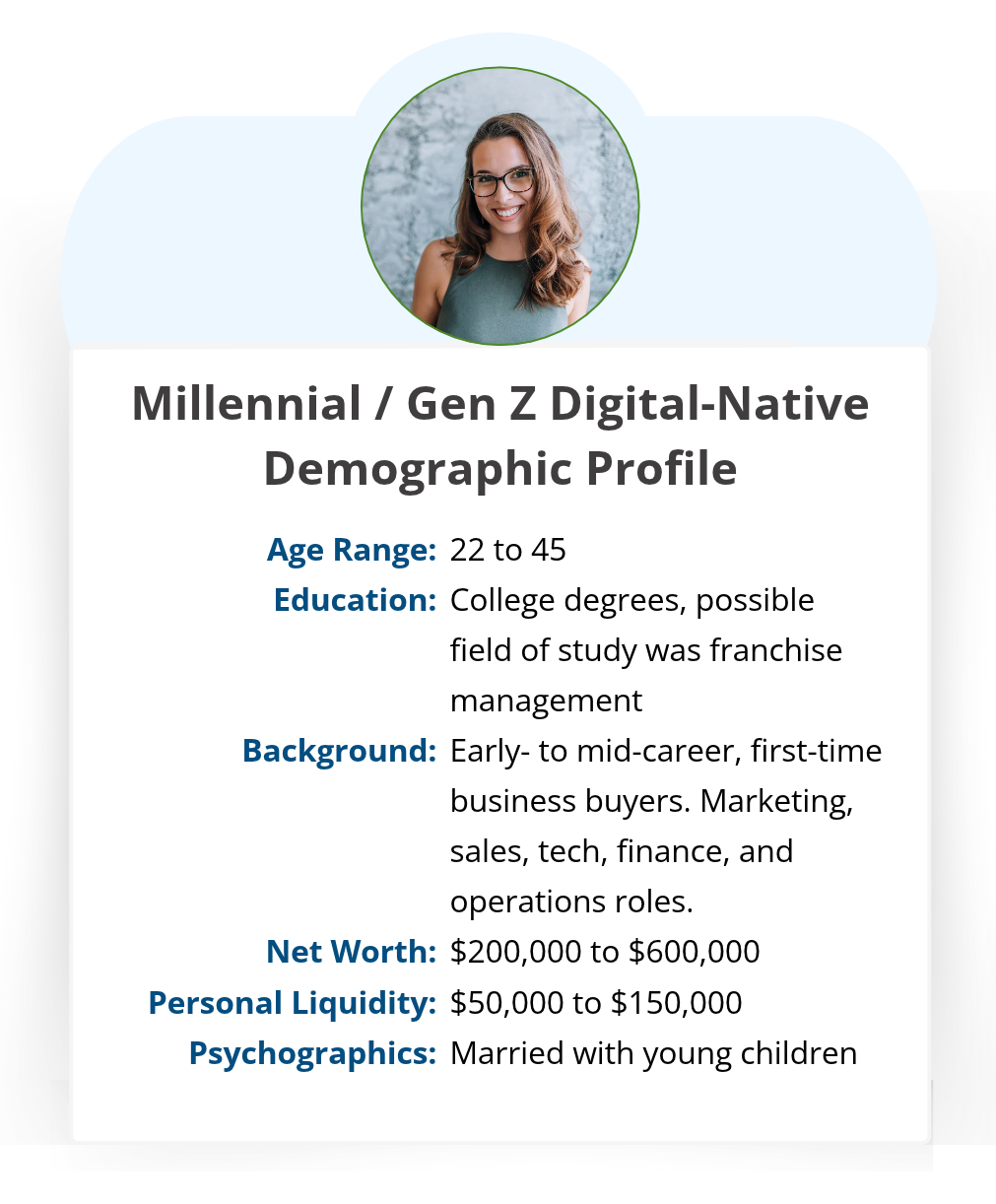
This persona is defined by generation rather than a fixed age band. The group covers Millennials and members of Generation Z, and the defining characteristic is that they are digital natives. They did not adopt technology mid-career. They have never worked without it.
Their financial profile reflects that earlier career stage. Estimated net worth falls between $200,000 and $600,000, which places them in the lower-to-mid investment tier of franchising. That capital was typically built through earnings rather than a liquidity event or a long executive tenure.
Net worth and liquid capital are not the same number, and the gap matters more here than with most personas. A meaningful share of this buyer's net worth is likely tied up in home equity, retirement accounts, and equity compensation. The cash actually available for a franchise investment is a fraction of the headline figure.
Because of that, this persona is a strong candidate for structured financing and phased growth. SBA lending, lower-investment tiers, and development agreements that allow a buyer to start with one unit and expand later all fit the profile. Concepts requiring heavy upfront buildout capital generally do not.
What Motivates the Digital-Native Buyer to Own a Franchise?
Motivation for this persona breaks into four connected drivers, and they operate together rather than in isolation. Franchise development teams that lead with only one of them will feel the conversation stall.
Wealth-building sits at the center. This buyer is not looking to replace a paycheck. They are looking to own an asset that appreciates, generates returns, and eventually operates without their constant presence.
Independence follows closely behind. Autonomy over their schedule, income ceiling, and career direction is the outcome they are purchasing. Impact and flexibility drive this buyer more than security does, and flexibility here means control rather than ease.
Technology and scalability function as proof of credibility. This persona expects modern operating systems, app-based workflows, real dashboards, and automation that reduces manual work. A brand running on spreadsheets and paper reads as a brand that will not scale, and this buyer notices immediately.
Values alignment completes the picture. The model has to match what they believe, and that requirement is not negotiable. What the brand stands for is part of the investment decision, not a closing detail added at Discovery Day.
What Kinds of Franchises Attract the Digital-Native Buyer?
Preferences for this persona follow directly from the capital band and the motivation set. They gravitate toward concepts that are efficient to launch, modern to operate, and realistic to replicate.
The categories that align most naturally with this buyer include:
Tech-enabled and app-based service brands with modern operating platforms
Home-based, mobile, and territory-based models with low fixed overhead
Health, wellness, and fitness concepts with a visible community component
Sustainability and impact-oriented brands where purpose is authentic rather than decorative
Systems offering multi-unit development agreements or clearly defined phased growth
Just as instructive is what tends to lose them. Capital-intensive brick-and-mortar buildouts stretch beyond their liquidity. Legacy systems with manual back-office processes conflict with their expectations. Concepts with no visible path beyond a single unit remove the scalability driver entirely.
Franchisors should note the multi-unit angle carefully. This buyer often thinks about unit two before signing for unit one, even when their capital only supports a single location today. Showing the growth path early strengthens the initial conversation rather than complicating it.
What Financial Concerns Hold This Buyer Back?
Total investment and downside risk dominate this buyer's thinking well before they contact a brand. Those questions land with particular force on a younger investor working with a smaller cushion.
The concerns that most often stall this persona include:
Concentration risk, since a single franchise can absorb most of the capital they have accumulated
Competing obligations such as student debt, a mortgage, and young family expenses that limit liquid reserves
Working capital shortfalls, because early-stage buyers frequently underestimate the runway required before break-even
Skepticism toward earnings claims, which sends them to Reddit threads, Glassdoor reviews, and FDD comparison blogs to separate marketing language from reality
Opportunity cost, because leaving strong salaried income and equity compensation is a quantifiable loss at this career stage
Transparency resolves more of this than persuasion does. Item 19 performance data broken out by unit type, geography, and owner tenure carries far more weight with this buyer than top-line averages. Vague financial framing reads as evasion, and evasion ends the conversation.
How Quickly Does the Digital-Native Buyer Decide?
This persona carries a decision timeline of two to four months, the shortest of any persona in the series. That speed is easy to misread as impulsiveness, and the misread is costly.
The compressed timeline exists because the research happens earlier and mostly out of view. Candidates often spend six to twelve months investigating privately before submitting a single form, with more than 70 percent of that research occurring between 9pm and midnight. By the time this buyer raises a hand, they have already narrowed the field.
The operational implication is direct. Your content has to do the work before first contact, and your response speed has to match their expectations after it. Delayed territory answers, slow follow-up, and clunky intake processes will lose a candidate who has already done the homework and expects a brand to keep pace.
What Pain Points Does This Persona Face?
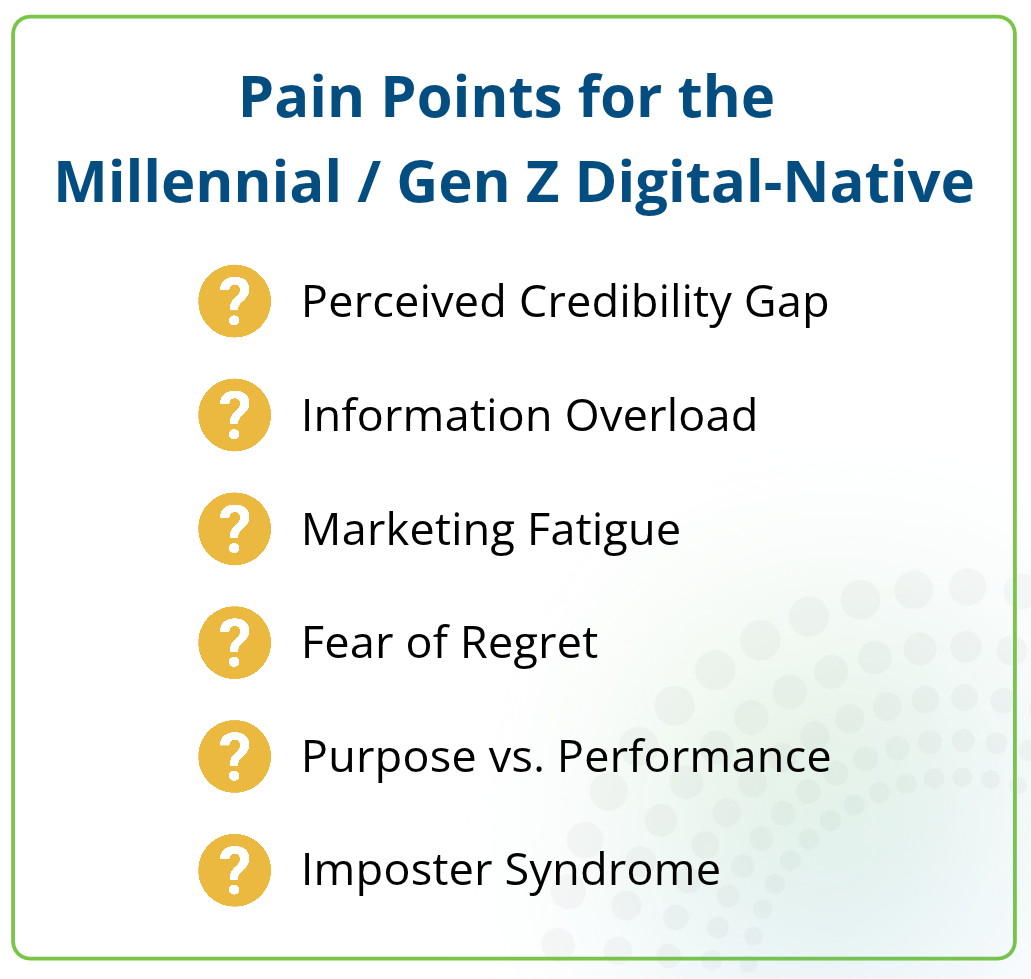
The obstacles this buyer encounters are as much psychological as financial. The emotional candidate journey includes fear, overwhelm, silence, and skepticism long before a decision is reached.
The pain points that surface most often for this persona include:
A credibility gap, because younger candidates often feel they must prove they belong in the conversation before being taken seriously
Information overload, with multiple tabs open, several brochures downloaded, and no framework for comparing opportunities
Marketing fatigue, since this is the most digitally saturated buyer in the framework and discounts promotional language instinctively
Fear of regret, which outweighs fear of failure among first-time buyers
Tension between purpose and performance, because they want a business that produces returns and reflects what they believe
Identity shift, as moving from employee to owner triggers imposter syndrome earlier in life than it does for other personas
Silence from this candidate is frequently misinterpreted. Quiet periods usually signal internal processing rather than lost interest, and applying urgency during those windows causes candidates to disappear instead of push back.
What Messaging and Content Earn Their Attention?
Persona-level marketing works when messaging speaks to why someone is exploring franchising rather than what the brand wants to say about itself. For this buyer, that means leading with ownership, systems, and purpose in the same breath.
Messaging themes that consistently resonate include:
Wealth-building framed as asset ownership rather than income replacement
Independence and flexibility described as control over time and trajectory
Technology shown rather than described, including the actual platform, dashboards, and automation
Scalability made visible, with the path to additional units explained early
Values and impact stated clearly and backed by something verifiable
Candid answers to difficult questions, including the ones most brands avoid
Format matters as much as substance here. Day-in-the-life video, honest owner retrospectives, side-by-side comparisons, decision frameworks, ROI calculators, and plain-language FDD breakdowns all perform well. Testimonials carry the most weight when they come from franchisees at a similar life stage.
How to Market To and Attract the Digital-Native Franchise Buyer
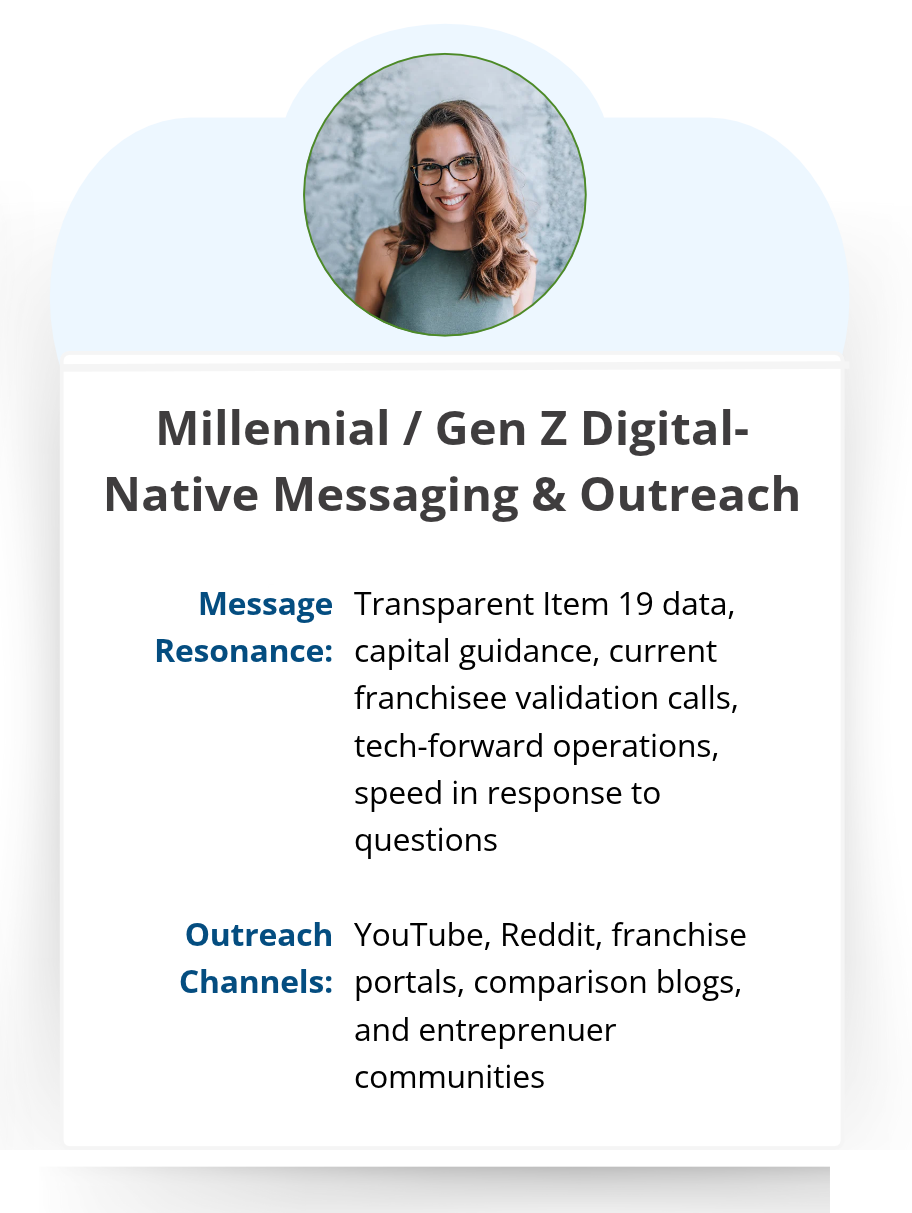
Reaching this persona requires meeting them in the channels where they already research and doing it before they identify themselves. Meta interest-based and life-event targeting performs particularly well with Millennial buyers, which makes it the logical foundation of a paid strategy.
A practical outreach approach for this persona includes:
Dedicated ad sets and creative built for this persona rather than one broad campaign, since a single asset cannot speak to an ROI-driven investor and a values-driven buyer simultaneously
A persona landing page positioned under a "Who This Is For" navigation hub, kept internally linked and crawlable rather than orphaned
Presence in the organic channels where this buyer actually researches, including YouTube, franchise portals, comparison sites, Reddit communities, and entrepreneur groups on Facebook
Identification of anonymous researchers during late-night sessions, so the relationship can begin months before a form submission
Stage-mapped content covering awareness pain points, consideration tools such as case studies and calculators, and decision-stage testimonials from matched franchisees
Persona tagging and scoring inside the CRM based on application data, on-site behavior, and conversation notes
One tactic deserves emphasis. Because so much of this buyer's evaluation happens invisibly, brands that only engage after a form fill are competing against brands that have been present for months. Person-level advertising and phase-matched content close that gap.
What Solutions Move This Buyer Past Hesitation?
Confidence, not additional data, is what converts this persona at the final stage. The brands that win give this buyer clear numbers, credible peers, and a visible operating system, then move at their pace.
The approaches that most reliably resolve hesitation include:
Transparent Item 19 data segmented by unit type, geography, and owner tenure
Validation calls with franchisees at a comparable age and life stage
Straightforward capital guidance covering SBA options, working capital requirements, and realistic break-even timing
Demonstrated technology and support infrastructure rather than described capability
Lower-barrier entry points paired with a defined path to additional units
Structured onboarding documentation that shows exactly what happens after signing
Fast, definitive answers on territory availability and next steps
That last point is easy to underestimate. For a buyer working on a two to four month timeline, response speed is read as evidence of operational quality. A brand that answers a territory question in under a minute signals competence that a polished brochure cannot.
What's Up Next?
The Millennial / Gen Z Digital-Native represents one of the most significant long-term growth segments in franchise development. This buyer brings technical fluency, a scaling mindset, and a genuine appetite for ownership, and they reward brands that operate with transparency and speed.
Our franchise buyer persona series continues with additional profiles drawn from the full set of 15 personas, including the Purpose-Driven Entrepreneur, the Private Equity or Family Office Buyer, and the Retiree Encore Career buyer. Visit the Franchise Education Center for the complete library of persona profiles and franchise development insights.
