
Franchise Buyer Persona Profile: The Women & Minority Changemaker
This article is the eighth installment of a continuing series that examines the 15 franchise buyer personas shaping today's franchise landscape. In this installment, we take a deep dive into the Women & Minority Changemaker franchise buyer.
Introducing the Women & Minority Changemakers
One of the fastest-growing segments in franchise development today is the Women & Minority Changemaker. These are experienced professionals — women, women of color, and minority men — who arrive at franchise exploration not as newcomers to the workforce, but as seasoned veterans of corporate and institutional careers.
They are credentialed, capable, and driven by something more than the desire to run a business. They are motivated by a need to own their outcomes, build lasting wealth, and create visible impact in the communities they call home.
This persona includes women across racial backgrounds, Black, Hispanic/Latino, Asian, and Indigenous entrepreneurs, and minority men who share a common thread: professional excellence that has been structurally constrained.
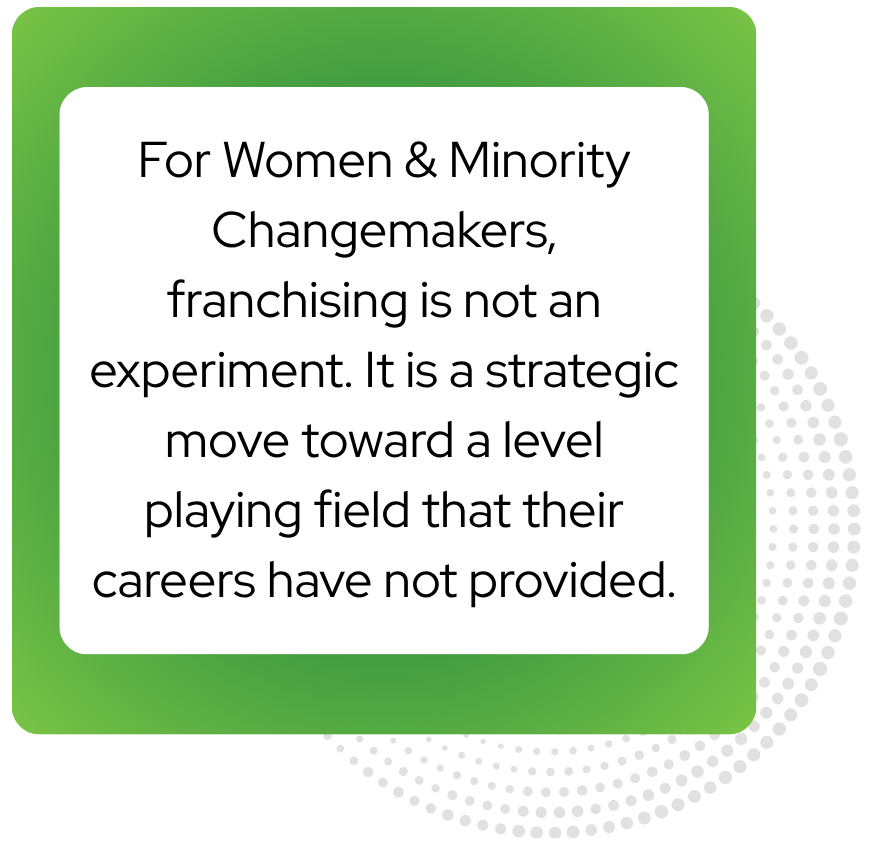
For these buyers, franchising is not an experiment. It is a strategic move toward a level playing field that their careers have not provided.
Understanding who they are, what drives them, and where their process slows down is essential knowledge for franchisors who want to grow in this segment. The data is compelling. Black-owned franchises earn 2.2 times more revenue than Black-owned independent businesses on average, according to the International Franchise Association.
Hispanic-owned franchise businesses generate 1.6 times more sales than their independent counterparts, per an Oxford Economics study. Women-owned franchises have grown by 38% over the last decade, and 89% of female franchise owners report enjoying the experience. These buyer succeeds when they get in. The challenge is getting them there.
Let’s dig in and explore the defining characteristics, motivations, financial profile, pain points, and franchise preferences of the Changemaker.
Who are the Women & Minority Changemakers?
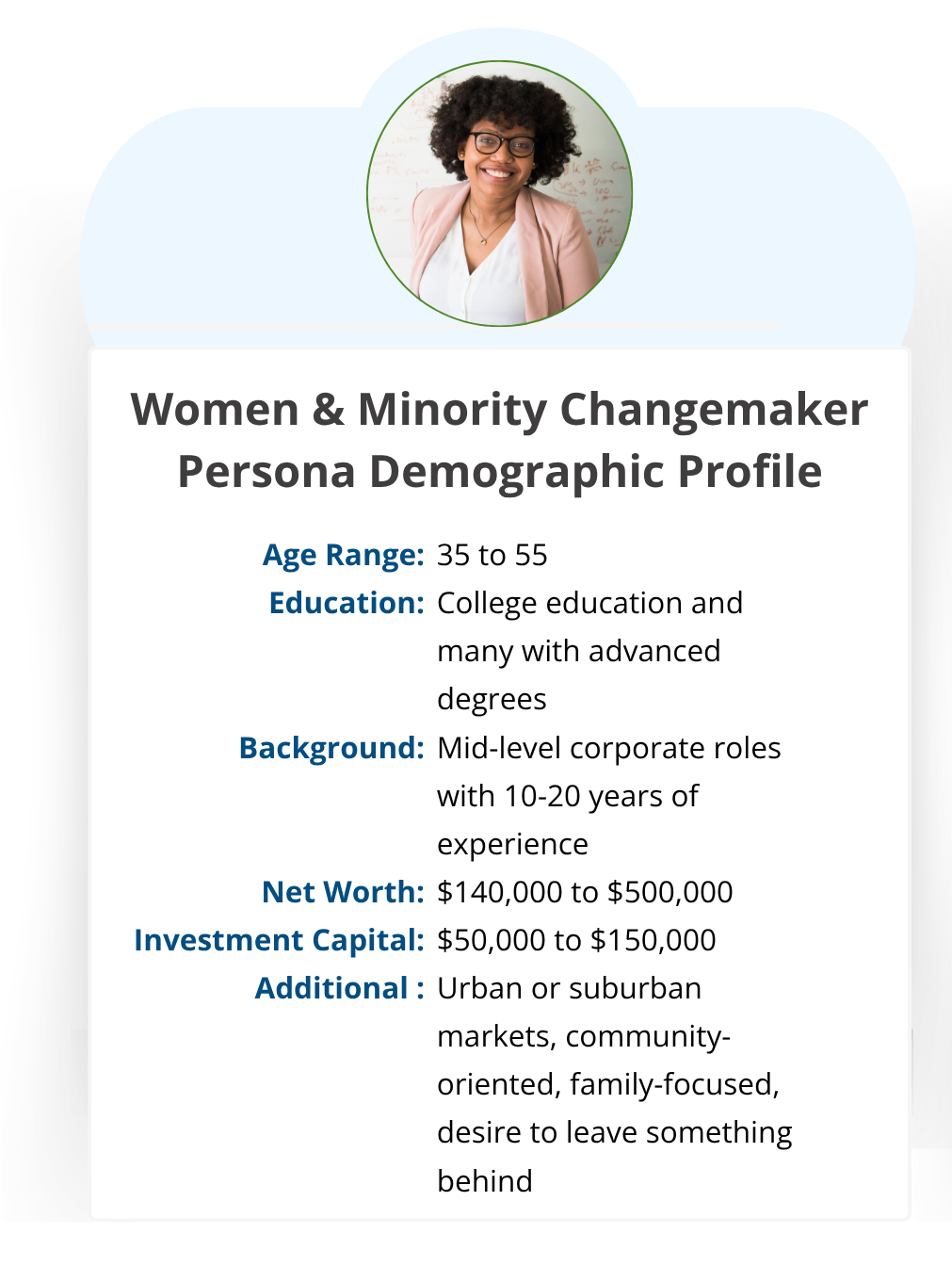
The Women & Minority Changemaker is a college-educated professional between the ages of 35 and 55, with the highest concentration in the 40 to 50 cohort. This persona spans a broad range of racial and ethnic backgrounds, encompassing women of all backgrounds, Black, Hispanic/Latino, Asian, and Indigenous entrepreneurs, and minority men who share similar career experiences and motivations.
Education levels are high across the board. Women in this persona are statistically more likely than their male counterparts to hold advanced degrees. According to the U.S. Census Bureau, 12% of women nationally hold graduate degrees compared to 8% of men. This educational achievement is important context: the Changemaker is not underqualified. They are overqualified relative to the advancement opportunities they have been given.
Professionally, these individuals come primarily from mid-level corporate and institutional roles, with 10 to 20 years of career experience. Their backgrounds commonly include:
Corporate mid-management: operations managers, regional directors, and HR leaders who have hit a ceiling in their organizations
Healthcare workers: nurses, administrators, and therapists who are disciplined operators with deep community ties
Educators: teachers and school administrators who excel at training, process management, and community engagement
Government employees: federal, state, and local workers who are process-driven and often seeking stronger income growth
Military veterans: mission-driven professionals who are systems-oriented and effective team builders
Financially, the Changemaker is less capital-rich than some other personas. Household income at the time of franchise inquiry typically falls between $75,000 and $150,000. Net worth generally ranges from $150,000 to $500,000, with many candidates on the lower end of that range. Liquid capital available for investment is usually between $50,000 and $150,000.
This financial profile reflects a real structural reality. Research by Robb et al. on gender and business financing found that women start businesses with nearly half the capital that men do. For minority buyers, the gap is further compounded by limited generational wealth and documented disparities in lending approval rates.
Geographically, the Changemaker tends to live in urban or suburban markets, often in or near communities that are underserved by the types of businesses they would want to own. This geographic context is relevant to their motivations, which are often tied to serving a specific community, not just a general market.
Psychographically, this buyer is community-oriented, family-focused, and deeply values the idea of leaving something behind. They are not simply seeking a job replacement. They are building a legacy.
What Motivates the Women & Minority Changemaker to Buy a Franchise?
Motivations for this persona are layered, personal, and rooted in lived experience. They are not abstract. Each motivation maps to something the Changemaker has directly encountered in their professional life. Franchise development teams that understand this will be able to communicate with far greater specificity and resonance.
The single most powerful motivation is the desire to escape the glass ceiling and wage inequality. For this buyer, the frustration is documented and quantifiable. They have watched less-qualified peers advance ahead of them. They have worked harder for less pay. "I want to get paid what I'm worth" is not a slogan for this persona — it is a statement grounded in lived reality. Franchising represents the bypass.
Independence and self-determination follow closely. After years of working within institutional constraints, ownership represents something these buyers have never fully experienced: control over their own direction and outcomes.
Generational wealth building is a particularly strong motivator among Black and Hispanic buyers, who are statistically more likely to lack a generational wealth backstop from family. For these candidates, building a franchise is not just a business decision. It is a way to build the wealth that systemic barriers have historically denied.
Community impact is also a defining driver. The Changemaker wants to create jobs in their neighborhood, bring services to underserved areas, and be a visible success story within their community. This is entrepreneurship as civic participation.
Additional motivations that consistently emerge for this persona include:
Work-life integration: The desire to design a schedule around family obligations, particularly for women managing caregiving responsibilities. Note that this buyer responds to the language of integration rather than balance — they want to design their life, not trade one thing for another.
Bypassing systemic discrimination: Franchising removes the need for others to believe in or sponsor them for advancement. Ownership creates the level playing field that corporate environments have not.
Financial security and income replacement: Leaving a stable corporate job — with benefits, a 401k, and predictable pay — is a significant risk. This buyer needs to see a credible path to income replacement before they will commit.
Meaningful work: Entrepreneurship is frequently described by women and minority professionals as a way to do something that matters. Mission alignment between the buyer and the franchise brand strengthens commitment significantly.
Legacy building: Creating something to pass to children and family is a core aspiration for this buyer, not a secondary consideration.
The Changemaker also sees franchising's structural advantages clearly. A proven system, an established brand, and built-in training and support all reduce the perceived risk of entrepreneurship — especially for buyers who cannot afford a failed first attempt. Unlike starting from scratch, franchising offers a roadmap that has already been tested.
What Kind of Franchises Draw the Women & Minority Changemaker?
This persona makes franchise decisions based on alignment. They are not simply looking for a sound investment. They are looking for an investment that aligns with their community, their values, their existing professional skills, and their financial reality. This shapes their preferences in specific and consistent ways.
Low-overhead and service-based concepts are particularly attractive. This reflects both the financial constraint of the persona and the practical appeal of businesses that can generate strong recurring revenue without heavy upfront infrastructure costs. The preferred investment range is $75,000 to $300,000 total investment, with a strong preference for home-based and mobile business models.
The franchise categories that consistently rank highest for this buyer include:
Health and wellness: Fitness studios, senior care services, mental health franchises, and medspas. These businesses serve underserved communities and align with the caregiving values many Changemakers bring from healthcare or education careers.
Education and childcare: Tutoring centers, early childhood programs, and enrichment services. Women own 51% of childcare franchises nationally, and this category carries strong cultural resonance and visible community impact.
Home services: Cleaning, restoration, landscaping, and repair franchises. Low overhead, recurring revenue, and a community-anchored model make these consistently attractive.
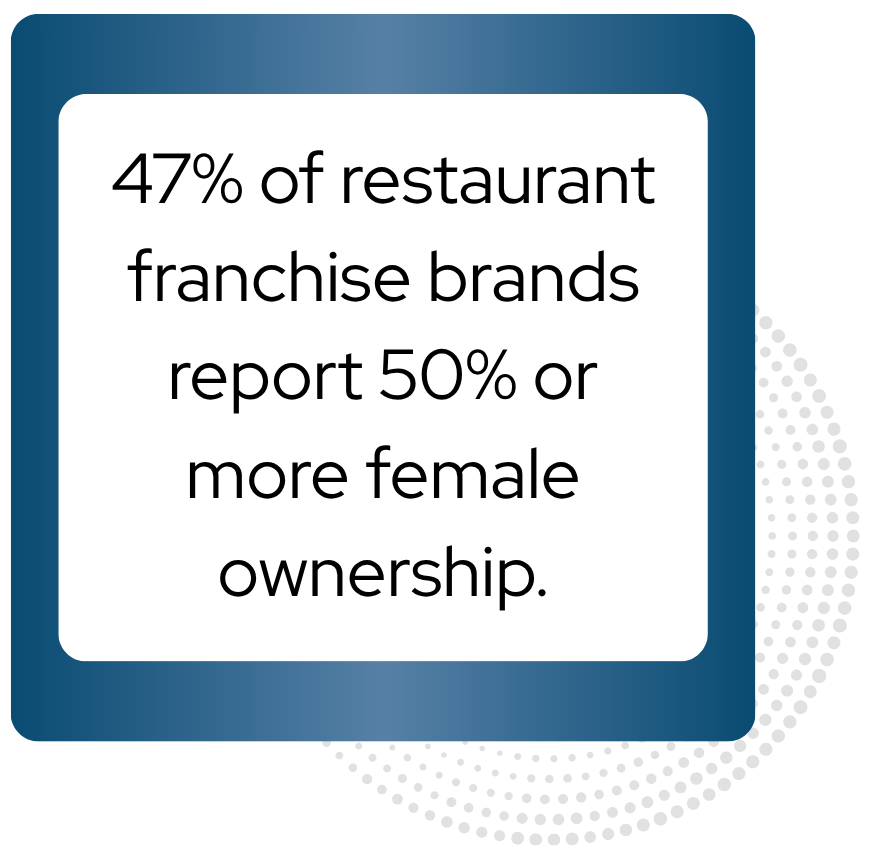
Food and beverage: Restaurant and café concepts with cultural authenticity. 47% of restaurant franchise brands report 50% or more female ownership.
Personal services: Hair, beauty, wellness, and personal care franchises that align with existing expertise and community connections.
Technology and digital services: Digital marketing, IT, and tech-enabled business franchises. Lower overhead and scalability make these particularly appealing to younger Millennial and Gen Z minority buyers.
B2B and professional services: Consulting, staffing, and financial services franchises that leverage the corporate background many Changemakers bring.
What this buyer is not looking for: heavy bricks-and-mortar investments, concepts requiring significant staffing before revenue stabilizes, or franchise brands where the investment range outpaces their liquid capital access. Starting with a single unit that proves the concept before expanding is a far more natural fit for this buyer than a multi-unit commitment at entry.
A sense of shared mission also matters considerably. Franchise brands that have visible diversity initiatives, reduced fee programs for minority buyers, and active community engagement carry a distinct advantage over brands that lack those signals.
How Quickly Does the Women & Minority Changemaker Commit?
The Changemaker's decision timeline is longer than average — and intentionally so. This is not a buyer who rushes. With limited capital, higher personal stakes, and more structural barriers to navigate, this persona performs thorough due diligence before committing. Development teams that misread deliberate care as low intent will lose candidates who were genuinely qualified and interested.
The full timeline from first inquiry to signed agreement typically spans 6 to 12 months and moves through four phases:
Phase 1, Initial Exploration and Research (2 to 6 months)
The Changemaker often approaches franchising as a concept they are exploring for the first time. Educational content and warm introductions are the key touchpoints here. This phase is longer than average because the stakes are higher and the knowledge base at entry is lower.
Phase 2, Brand Discovery and Evaluation (45 to 60 days)
Once a specific brand is identified, the formal discovery process begins. Connecting the prospect with existing minority and women franchisees as early as possible in this phase is the single highest-impact action a development team can take.
Phase 3, Financing and Qualification (30 to 90 days, additional)
Financing is typically the primary bottleneck. SBA loan processing, CDFI applications, and family capital conversations all take time. Proactive financing education and early lender introductions accelerate this phase significantly.
Phase 4, Final Decision and Signing (2 to 4 weeks)
Final legal review and family consultation. Addressing the "what if it fails" question directly with concrete data at this stage reduces last-minute attrition.
The factors most likely to extend or derail the timeline include:
Financing complexity
Peer and family discouragement from risk-averse community members
Imposter syndrome that manifests as over-research and analysis paralysis
Information gaps around the FDD and the franchise process itself
Development teams serving this persona should build a longer nurture sequence, check in monthly, and focus on confidence-building over pressure. This is a relationship-based sales process, not a transactional one.
What Pain Points Do Women & Minority Changemakers Face as Franchise Buyers?
The Changemaker faces a distinct and well-documented set of challenges that the average franchise buyer does not encounter. Many of these are structural, not personal. Franchisors who acknowledge these challenges directly will earn trust that generic sales approaches cannot.
Access to capital remains the single biggest barrier. Loan applications from minority and women-owned businesses are approved at rates up to 20% lower than those from non-minority male counterparts, according to research published by Southern University. This is not primarily a creditworthiness issue — it reflects systemic bias in lending institutions. The downstream effect is self-disqualification: many qualified buyers never apply because they expect to be turned down.
Financial vulnerability compounds this challenge. Unlike buyers with family wealth or significant savings reserves, the Changemaker is often investing their only financial safety net. A failed investment has no backstop. This makes the stakes of a wrong decision categorically different from those facing a better-capitalized buyer.
Imposter syndrome is documented and significant. Research from the University of Michigan found that women and minority entrepreneurs frequently internalize the message that entrepreneurship is "not for people like them." The result is persistent self-doubt even among highly qualified candidates. Peer validation and representation — seeing people with similar backgrounds who have succeeded — is the most effective antidote.
Additional challenges that franchise development teams should be prepared to address include:
Lack of role models and representation
When franchise marketing materials, Discovery Days, and FDD examples do not include diverse owners, the absence is itself a message. Representation is a credibility signal, not just a courtesy.
Exclusion from traditional networks
The informal channels through which many majority buyers learn about franchise opportunities — professional associations, alumni networks, and personal connections — are largely inaccessible to this persona.
Peer and family discouragement
Community members who are risk-averse may actively discourage the investment. Social pressure from trusted people can stall or kill a deal that the prospect was genuinely prepared to make.
Information asymmetry
Many Changemakers are encountering the franchise model for the first time. They may not know what an FDD is, what Item 19 means, or how the qualification process works. Education is not a supplement to the sales process for this buyer — it is the entry point.
Cultural expectations
For immigrant women or women in traditional households, cultural norms around risk-taking and women's roles can create internal conflict that slows the decision process.
Franchise development teams that address these challenges explicitly and with data will differentiate themselves meaningfully from competitors who rely on generic outreach.
How to Market to and Attract the Women & Minority Changemaker
Effective outreach to this persona requires abandoning a one-size-fits-all approach. Generic franchise marketing does not convert the Changemaker. She has heard aspirational messaging that does not reflect her reality. What earns her trust is specificity, authenticity, representation, and data.
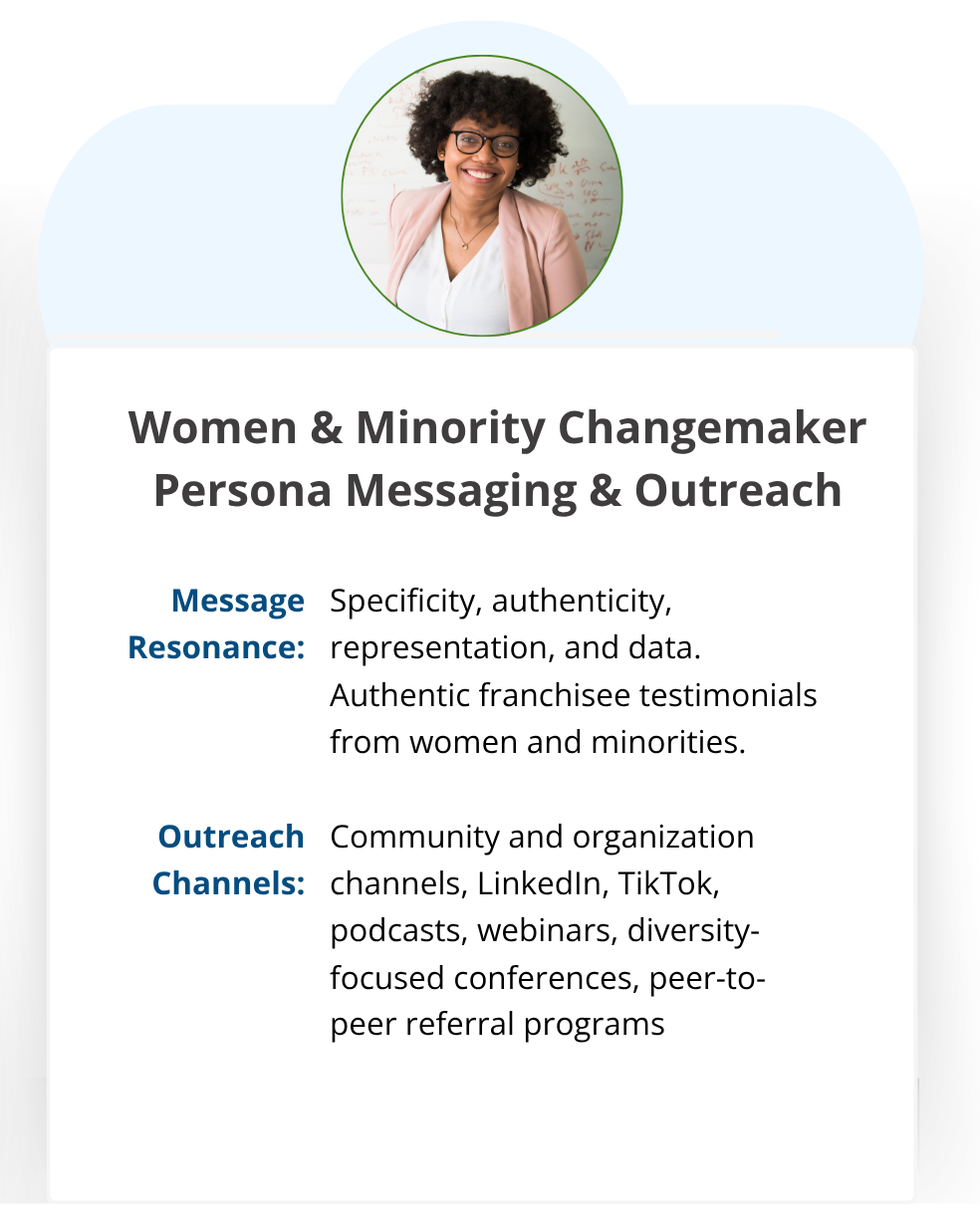
The highest-impact content formats are authentic franchisee testimonials from women and minorities. These should not be polished corporate narratives. Real stories from real owners who share her background are the single most persuasive tool available to a franchise development team. Nothing else comes close.
Messaging that connects with the Changemaker's lived experience includes the following themes:
"Own your income" and "get paid what you're worth": These phrases map directly to the wage gap frustration that drives this buyer toward entrepreneurship. Use them with intention.
Generational wealth framing: Position the franchise as legacy infrastructure. "Build something to pass down" resonates deeply with Black and Hispanic buyers who lack inherited wealth.
Community impact: Make the local impact story explicit. This buyer wants to be the change in her community, and franchise brands that speak to that aspiration stand out.
Proof over promise: Cite the 2.2x and 1.6x revenue advantages that Black and Hispanic franchise owners demonstrate over their independent business counterparts. Data outperforms inspiration.
Risk mitigation through the franchise system: Help the buyer understand that she is not starting from scratch. Contrast franchise failure rates with those of independent startups.
Work-life integration language: Use the word integration, not just balance. Balance implies trade-offs. Integration implies design and control, which is what this buyer is seeking.
Honest acknowledgment of systemic barriers: Do not pretend the playing field is level. Earn trust by naming the challenges this buyer faces and demonstrating how your franchise system specifically addresses them.
Marketing and outreach channels that produce results with this segment require going beyond traditional franchise expos and broker networks. The Changemaker lives in specific communities, consumes specific media, and trusts specific voices. The channels most effective for reaching her include:
Community and organizational channels: HBCU alumni networks, NAACP chapters, Greek organizations including AKA, Delta Sigma Theta, NSBE, and Alpha Phi Alpha, the National Urban League, LULAC, AAPI business organizations, and church and faith-based community networks. SBA Women's Business Centers and Minority Business Development Agencies (MBDAs) are also high-value channels that deliver pre-qualified, motivated prospects.
Digital and content channels: LinkedIn is where corporate professionals explore career transitions and financial independence. Instagram and Facebook support community storytelling and aspirational content. TikTok reaches younger minority buyers with educational and authentic formats. Podcast advertising and sponsorships on minority entrepreneurship shows deliver engaged audiences. Webinars and free educational content that demystify the FDD, the qualification process, and the financing pathways are particularly effective at building trust early.
Events and partnerships: Diversity-focused conferences, including the Essence Festival, Black Enterprise Summit, ALPFA, USHCC, and NSBE provide direct access to concentrated audiences. The IFA Franchise Ascension Initiative, Black Franchise Association events, and NAWBO are also productive venues. Speaking at franchise panels within minority business ecosystems — not just sponsoring them — creates credibility that paid advertising cannot replicate.
Conversion and retention strategies: Peer-to-peer referral programs carry exceptional weight with this audience, as word-of-mouth from community peers is the highest-trust signal available. Scholarship and reduced franchise fee programs should be publicized loudly and prominently — they are competitive differentiators that demonstrate a brand is serious about inclusion. Follow-up cadence should be consistent and patient across the full 6- to 12-month decision timeline. High-pressure tactics will end the relationship permanently.
Solutions that address specific doubts and hesitations should include:
Publishing transparent Item 19 data with demographic breakdowns where possible
Connecting prospects with diverse franchisees early in the discovery process, before the formal pipeline begins
Offering proactive financing education that presents SBA 7(a) loans, ROBS strategies, CDFIs, and microloans before candidates self-disqualify
Running structured mentorship matching programs that pair prospects with experienced owners from similar backgrounds
Ensuring Discovery Days feature diverse franchisee representation in the room, not just in marketing materials
Providing free educational resources, including FDD explainers, franchise readiness assessments, and net worth calculators
Addressing the "what if it fails" question directly and with data, rather than deflecting it
What's Next?
The Women & Minority Changemaker represents one of the highest-growth and highest-potential buyer segments in the industry. By understanding the structural motivations, financial realities, and conversion barriers specific to this group, franchisors and marketers can build more inclusive, more effective, and more successful franchise development programs.
Next month, we’ll continue this series by examining another franchise buyer persona. In the meantime, you can read about the other franchise buyer personas we have covered in the past:
Home-Based, Low-Cost Lifestyle Seeker
Immigrant and E-2 Franchise Investor
