
Summary: Starting with the iOS, iPadOS, macOS, and visionOS 27 releases, Apple's Safari blocks third-party identity resolution vendors that quietly collect visitors' email addresses and turn them into tracking IDs. Franchise Ninja doesn't work that way. Its tag never reads form fields or captures emails, so the block doesn't touch it. Safari match rates haven't changed since the rollout, and Franchise Ninja is checking them daily. It's also auditing every partner domain to confirm none of them use the method Apple is blocking.
In October, Apple published a WebKit post that got the whole ad tech world talking. Safari and WebKit now block network access to what Apple calls "identity resolution infrastructure." If your franchise development team depends on knowing who is visiting your site, you probably have questions.
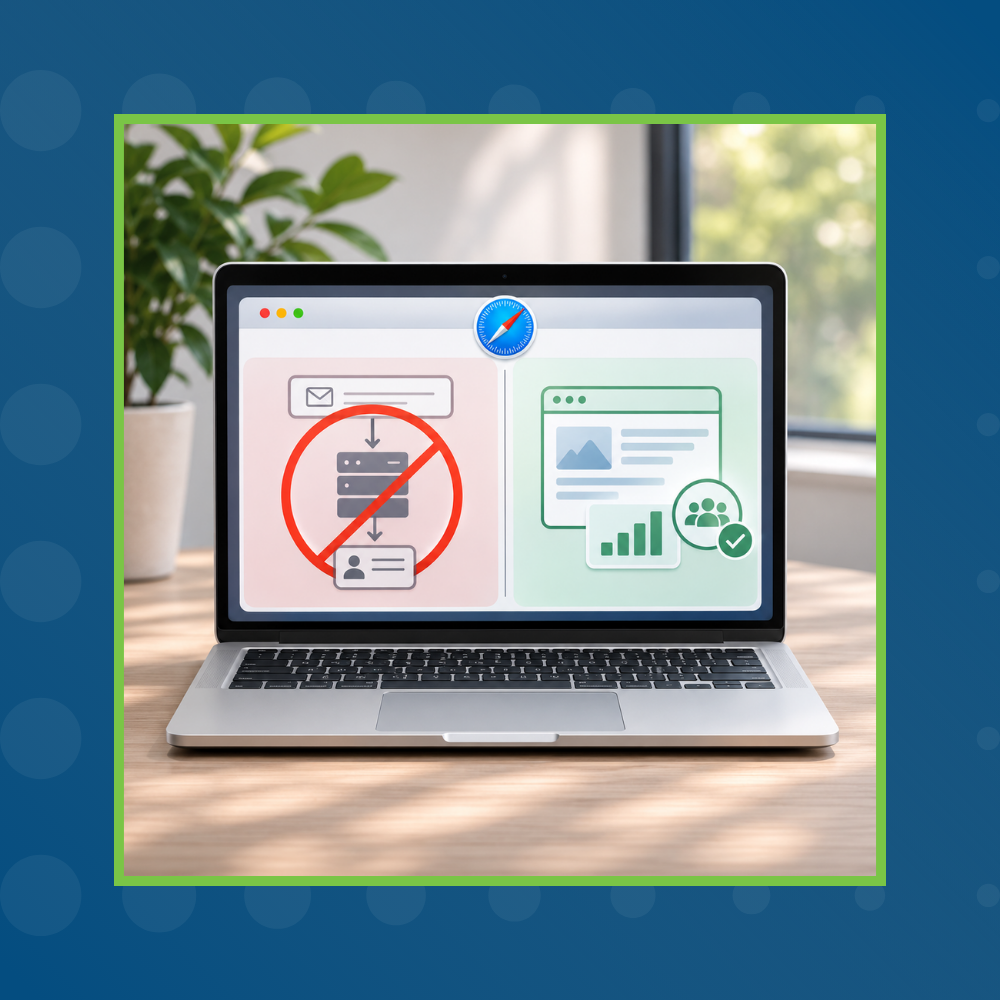
The short version: this Safari identity resolution block targets one specific tracking pattern. That pattern is not how Franchise Ninja identifies candidates.
Below, you'll find what Apple announced, what it left out, how the industry is reacting, and the questions franchise brands are asking most.
What Apple Announced About Safari Identity Resolution
Apple's October 19 WebKit post says the iOS, iPadOS, macOS, and visionOS 27 releases block network access to identity resolution infrastructure. The goal is to prevent cross-site tracking.
The Tracking Method Apple Is Targeting
Apple calls this a "post-cookie" tracking method. It works like this:
A third party (not the site owner) quietly collects a visitor's email address when they log in or sign up for a newsletter.
The email is sent to the third party's servers.
Those servers create an opaque tracking ID permanently tied to that email.
The ID is sent back to the page, where it can be used for cross-site profiling and ad targeting.
Over time, these vendors build an "identity graph" that can include name, address, phone, and IP. That supports tracking across sites and across devices. According to Apple, logging out or unsubscribing does not remove the stored ID.
How the Block Works
The block is enforced at the domain level. Vendors can't restructure their requests to get around it. The email simply never leaves the browser to reach those servers.
Where Apple Drew the Line
Apple made a few points clear in its post:
First-party personalization is still allowed. In Apple's words, "First party personalization is not tracking." Sites can still personalize experiences for their own users.
Central resolvers count as third parties. Even if a resolver only handles one company's data, Apple treats it as a third party. That's because it holds cross-site, cross-device data and can act as a matching "clearinghouse."
Hide My Email gets a plug. Apple points to Hide My Email as an extra layer of protection against email-based tracking.
What Apple's Post Leaves Out
Apple's announcement is notable for what it doesn't say. Apple names no companies and publishes no list. It also doesn't explain how domains are chosen or whether vendors can appeal.
A public WebKit bug report from September did list the domains blocked at that time. They included:
uidapi.com (UID2)
adsrvr.org
id5-sync.com
rlcdn.com and pippio.com (LiveRamp)
permutive.com
ad.gt (Audigent)
The Trade Desk's ad-serving domain, adsrvr.org, appears to have been restored in an iOS 27.2 beta. So the list is still moving.
How the Industry Is Reacting
The WebKit post came out about a month after the blocking actually started in September. That gap left publishers and vendors scrambling to catch up.
Ad tech's main response is to move identity resolution server-side. Two approaches are getting the most attention:
ID5 is advancing server-side integrations and testing with selected publishers.
IAB Tech Lab's Trusted Server Framework sends identity calls from the publisher's own domain, out of the browser's view.
There are still real doubts about whether these workarounds hold up long term. Expect more changes.
What This Means for Franchise Ninja Users
Franchise brands use AI Discovery to find anonymous and in-market candidates on their websites. So it's fair to ask whether Safari's change affects that.
Here are the questions franchise development teams are asking most, with straight answers.
Have You Seen Any Drop in Match Rates From Safari or iOS Traffic?
Not one that can be attributed to this change.
Safari has been the hardest browser to resolve for years. That's because of Intelligent Tracking Prevention and iCloud Private Relay, which masks IP addresses for iCloud+ subscribers. Safari match rates were already lower than Chrome's before September. That gap is the main thing Franchise Ninja tracks. There has been no step change since the 27 releases rolled out.
Will Franchise Ninja's Infrastructure Be Affected?
Not based on what Apple has described.
Apple's post targets third parties that "invisibly collect your email address when you log in or sign up for a newsletter," send it to their servers, and return a persistent ID to the page. The Franchise Ninja tag doesn't work that way. It does not read form fields or capture email addresses from your pages.
Identification happens on the Franchise Ninja side. Anonymous session signals are matched against an identity graph. There is no email-to-ID round trip in the browser, so there's nothing for Safari to block.
What Is Franchise Ninja Doing to Reduce Risk?
Two things are happening right now:
Daily match-rate monitoring. Any movement shows up within a day, not at month end.
A full domain audit. Every third-party domain in the collection and resolution path is being reviewed. The goal is to confirm no data partner relies on browser-side email capture, which is the exact pattern Apple is blocking.
What Should Your Team Be Doing?
Keep watching. The fixes are still changing.
Many identity vendors are moving their matching onto servers to get around the Safari block. ID5 is shifting more of its identity infrastructure server-side. IAB Tech Lab is promoting its Trusted Server framework. If you work with other ad tech or identity vendors, ask them how they're responding.
The Bigger Picture for Franchise Development
Privacy rules and browser controls will keep tightening. That's not new. What matters is whether your tools are built on methods that browsers are actively shutting down.
Apple's line is clear. Quietly grabbing emails from forms and passing them to outside servers is out. First-party personalization is in. For franchise brands, that's a useful filter when you evaluate any vendor in your franchise development tech stack.
It also reinforces why privacy needs to be built in, not bolted on. You can read more about how Franchise Ninja approaches privacy compliance here.
Talk Through Your Safari Traffic With a Specialist
Not sure how Safari's changes show up in your own candidate data? Schedule a meeting with a Franchise Ninja product specialist. In one short call, you can review your current match rates, see how candidates are identified, and get clear answers on what to watch next.
